
Old Photos of Bagshot
Read moreShow less
Bagshot's origins go back further than its neighbour's: excavations have turned up evidence of pre-Roman occupation, with Late Bronze Age settlement and local iron smelting, though for most of its recorded history Bagshot was treated simply as a chapelry within the ancient parish of Windlesham. Its royal connections are old and consistent — the first known reference to a Royal park at Bagshot dates to 1486, when the "office of the keeper of the Park of Bagshot" was granted, and by Stuart times the site had become a favoured hunting lodge for James I and Charles I, with a house designed by Inigo Jones built there between 1631 and 1633.
That original lodge was destroyed during the Civil War; its country-house replacement stood until 1878, when it was demolished to make way for the present Bagshot Park mansion, completed in 1879. Bagshot's real commercial identity, though, was built on the road rather than the park: sitting on the Great West Road, the main route from London to the West Country, the village prospered through the Elizabethan era and into the coaching age as a staging post, its inns and stables offering fresh horses to stagecoaches such as the 17-hour "Exeter Telegraph" service — a prosperity that also attracted highwaymen, most famously William Davis, the "Golden Farmer," eventually captured at Bagshot's White Hart Inn and hanged at Gibbet Lane in nearby Camberley. Bagshot Park itself passed through a succession of royal and aristocratic tenants, including the future King George IV, before Queen Victoria's third son, Prince Arthur, Duke of Connaught, took up residence in 1880 and remained there until his death in 1942 — during which time an Indian-style billiard room, prefabricated in India and inspired by his own tour there, was added to the house in the 1880s.
The coaching trade that had sustained the village for centuries collapsed almost overnight when the London to Southampton main line opened in 1838, bypassing Bagshot entirely and plunging it into depression, but a local branch line some twenty years later revived the village's fortunes by giving its nursery gardens fast access to London's Covent Garden market. Bagshot finally separated from Windlesham to become its own ecclesiastical parish in 1874, and its parish church was built a decade later largely through the patronage of the Duke of Connaught himself. The house at Bagshot Park was requisitioned as an Army staff college during the Second World War before returning to royal use, and remains a working royal residence today, currently home to the Duke and Duchess of Edinburgh.
Welcome to the Bagshot historical archive. This section currently features 8 historical photos within Bagshot, helping you explore the visual history of the area.
Explore historical photos for Bagshot. Browse source images and location-based visual history from the GhostViewer archive.
Open the images to view more information, then load them into the GhostViewer app.
📸 Turn These Old Photos into a Real-World Adventure
Want to see these historic backdrops with your own eyes? Discover the best walking and cycling trails in Bagshot. Open AllTrails to unlock local route maps and walk through history on your next outing.
📚 Explore the history of this place
Discover local history books and historic maps related to Bagshot. Plain Amazon links are localised for your country by our affiliate partner.
Date range: 1962 to 2015.
Partner provenance: 2 linked partners for this location.
Partners: Geograph Britain and Ireland, Wikimedia Commons.
Memories of Bagshot - read and add your own.
No memories have been shared for this place yet.


Bagshot Railway Station

The Kings Arms, Bagshot

The Co-operative Store, Bagshot

Brook Church, Bagshot

Bagshot Centre and Kings Arms

The Kings Arms, Bagshot

High Street, Bagshot
Bagshot items on eBay
-
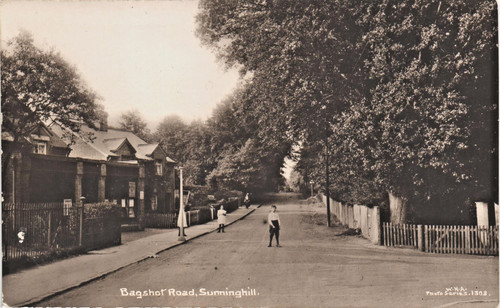 Sunninghill. Bagshot Road # 1303 by WHA.
Unspecified
-
 The Pantiles Tea Barn & Lawn, Bagshot, Surrey - Vintage Postcard - The R.A.P. Co
Used
-
 1927 POSTCARD IRON BRIDGE SUNNINGHILL BERKSHIRE NR ASCOT VIRGINIA WATER BAGSHOT
Used
-
 Said to Be BAGSHOT HEATH - Arbuthnot Trophy Day Band - Motorcycling Scramble RP
Unspecified
-
 The Pantiles interior view Bagshot RAP Co Ltd Architecture Hotel Restaurant
Used
-
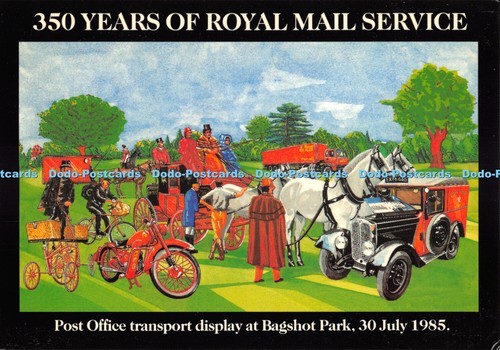 D066093 Post Office transport display at Bagshot Park. 1985. 350 Years of Royal
Used